
If you have an RO water purifier at home — and most Indian households do — a TDS meter is the simplest way to check it's actually doing its job. Whether your borewell water runs at 800 ppm or your municipal supply hovers around 300, a quick dip-and-read tells you if the purifier output is in the safe 50–150 ppm range. It's also the fastest way to spot a failing RO membrane before the water starts tasting off.
We evaluated 18 TDS meters available on Amazon.in, rejected 7 for being overpriced imports or duplicates, and shortlisted 11 that offer genuine value for Indian buyers. Our picks range from ₹172 disposable pens to ₹2,144 premium 4-in-1 testers, with the sweet spot firmly in the ₹200–600 range where you get accuracy, replaceable batteries, and honest Indian reviews.
Our Top Picks
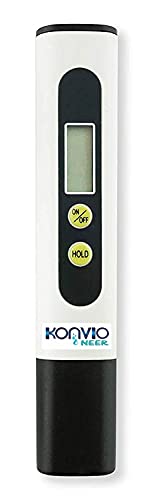
Konvio Neer TDS Meter for Water Testing
India's most trusted TDS pen — proven by tens of thousands of buyers for everyday drinking-water and RO testing.
- The most proven TDS meter on Amazon.in — 52,000+ ratings at 4.3 stars
- Accurate, reliable readings for everyday drinking-water and RO checks
- Replaceable LR44 batteries (included) — not a sealed throwaway design
- India-made with a 6-month warranty and local support
- Excellent value at ~₹299 — the safe default for most homes
Quick Comparison
| Product | Rating | Price | Modes | Range | Battery | Buy |
|---|---|---|---|---|---|---|
| Konvio Neer TDS Meter Top Pick | 9.2 | ₹299 | TDS + Temp | Up to 500 ppm | LR44 (replaceable) | View on Amazon |
| HM Digital AP-1 Best Premium | 9.1 | ₹965 | TDS, Temp | 0–9990 ppm | LR44 (replaceable) | View on Amazon |
| HM Digital TDS-3 Best Build Quality | 9.0 | ₹949 | TDS + Temp | 0–9990 ppm | LR44 (replaceable) | View on Amazon |
| Konvio Neer 3-in-1 Best for Aquariums & Hydroponics | 9.0 | ₹599 | TDS, EC, Temp | 0–9990 ppm | LR44 (replaceable) | View on Amazon |
| iSpring TDS Meter Best Metal Body | 9.0 | ₹245 | TDS, Temp | 0–9990 ppm | LR44 (replaceable) | View on Amazon |
| Aptechdeals TDS Meter Runner-Up Value | 8.9 | ₹279 | TDS, EC, Temp | 0–9990 ppm | LR44 (replaceable) | View on Amazon |
| GLUN TDS Meter Best Budget | 8.9 | ₹179 | TDS + Temp | 0–9990 ppm | LR44 (replaceable) | View on Amazon |
| Varify 4-in-1 TDS Meter Best 4-in-1 | 8.9 | ₹2,144 | TDS, EC, Temp | 0–9990 ppm | LR44 (replaceable) | View on Amazon |
| 8.8 | ₹249 | TDS + Temp | 0–9990 ppm | LR44 (replaceable) | View on Amazon | |
| SKADIOO TDS Meter Cheapest | 8.8 | ₹172 | TDS + Temp | 0–9990 ppm | Sealed (non-replaceable) | View on Amazon |
| 8.8 | ₹218 | TDS + Temp | 0–9999 ppm | LR44 (replaceable) | View on Amazon |
How We Rated These Products
Based on reading accuracy, build quality, ease of use, features, and value for Indian buyers
Reading accuracy vs known standards, ATC (auto temperature compensation), recalibration ability, and consistency across India reviews
Casing robustness, probe/electrode longevity, water resistance, and rate of early-failure complaints
Display readability, hold function, auto-off, backlight, one-button operation and clarity of manual
TDS + EC + temperature modes, measurement range (0–9990 ppm), and conversion/ATC settings
GST-inclusive price vs performance, batteries/case included, warranty, and cost relative to the field
Detailed Reviews
Konvio Neer TDS Meter for Water Testing
Top PickIndia's default TDS pen — the most proven, best-reviewed choice for everyday water testing.
Our Rating
9.2₹299
Check Price Specifications
| Brand | Konvio Neer |
|---|---|
| Type | Pen TDS |
| Modes | TDS + Temperature |
| Max TDS | 500 ppm |
| Battery | 2x LR44 (included) |
| Auto Shut-Off | Yes |
| Origin | India |
| Warranty | 6 Months |
| Weight | 30 g |
| Amazon Rating | 4.3 (52,726 reviews) |
Pros
- Hugely proven — 52,000+ ratings at 4.3 stars
- Accurate enough for everyday RO/drinking-water checks
- Replaceable LR44 batteries (included)
- India-made with 6-month warranty
- Very good value at ~₹299
- Compact, light and simple one-button use
Cons
- At this volume, some units arrive DOA
- A few report drift/wrong readings after weeks
- Warranty/return service can be slow
- Single-function: no EC mode
Rating Breakdown
Our Verdict
For the job most Indian homes actually buy a TDS meter for — checking drinking water and RO output — the Konvio Neer is the safest pick by a wide margin. With 52,000+ ratings at 4.3 stars, it's the most battle-tested meter on Amazon.in, and the replaceable batteries mean it won't become a throwaway after six months.

HM Digital AP-1 AquaPro Water Tester with Thermometer
Best PremiumHM Digital's build-quality benchmark, with auto-off and a protective case.
Our Rating
9.1₹965
Check Price Specifications
| Brand | HM Digital |
|---|---|
| Model | AP-1 |
| Type | Pen TDS + Temp |
| Modes | TDS, Temperature |
| Auto-Off | Yes |
| Certification | CE |
| Carry Case | Plastic care box |
| Origin | India |
| Weight | 70 g |
| Amazon Rating | 4.3 (472 reviews) |
Pros
- Premium, instrument-grade build quality
- Auto-off to preserve battery life
- Trusted HM Digital brand, India-made
- CE certified with protective care box
- Accurate and consistent for most users
- Thermometer function included
Cons
- Several times the price of budget pens
- Occasional defective battery supplied
- A few inconsistent-reading reports
- Single-function (TDS + temperature only)
Rating Breakdown
Our Verdict
The AP-1 is for buyers who want a meter that feels like an instrument rather than a throwaway. Auto-off, a hard care box, and HM Digital's reputation justify the premium, though it costs several times the budget pens for fundamentally the same TDS + temperature readings.

HM Digital TDS-3 Pocket TDS Meter with Carry Case
Best Build QualityThe iconic TDS-3 — the meter many RO technicians actually carry.
Our Rating
9.0₹949
Check Price Specifications
| Brand | HM Digital |
|---|---|
| Model | TDS-3 |
| Type | Pen TDS + Temp |
| Modes | TDS, Temperature |
| Carry Case | Leather |
| Origin | India |
| Weight | 80 g |
| Amazon Rating | 4.1 (1,568 reviews) |
Pros
- Best-in-class build feel for the price tier
- Iconic, widely-trusted TDS-3 design
- Leather carry case included
- India-made HM Digital with brand backing
- Temperature display included
- Strong long-term reliability reports
Cons
- Batteries not included
- Probe/cell can rust if stored wet
- Costs more than local-brand pens
- Warranty response can be slow
Rating Breakdown
Our Verdict
A long-standing favourite with the sturdiest feel in the budget-to-mid range and a leather carry case — the TDS-3 is the meter many RO technicians actually carry. Just remember batteries aren't included and the probe can corrode if stored wet.
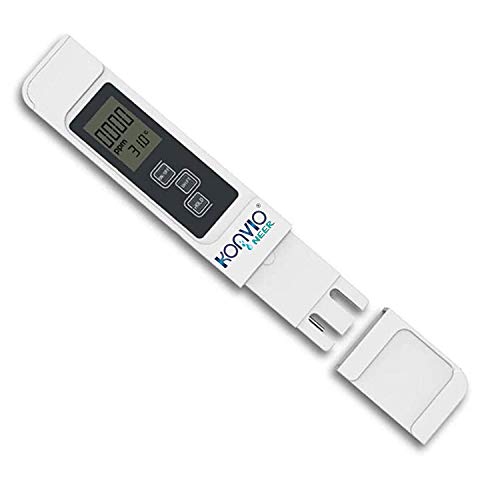
Konvio Neer 3-in-1 TDS, EC & Temperature Meter (ATC)
Best for Aquariums & HydroponicsA feature-rich 3-in-1 with ATC, hold function and a premium probe rated to 80°C.
Our Rating
9.0₹599
Check Price Specifications
| Brand | Konvio Neer |
|---|---|
| Type | 3-in-1 |
| Modes | TDS, EC, Temperature |
| ATC | Yes |
| Hold Function | Yes |
| Max Temp | 80°C |
| Origin | India |
| Warranty | 6 Months |
| Amazon Rating | 4.2 (303 reviews) |
Pros
- TDS, EC and temperature in one unit
- Automatic Temperature Compensation
- Hold function freezes the reading
- Premium probe rated up to 80°C
- India-made with 6-month warranty
- Good accuracy in everyday use
Cons
- Temperature mode fails on some units
- Costs ~2x the Aptechdeals 3-in-1
- Occasional accuracy complaints
- Design/ergonomics could be better
Rating Breakdown
Our Verdict
The pick for serious aquarium and hydroponics users who need EC, ATC, and a reading-hold function with a sturdier probe rated to 80°C. It costs about twice the Aptechdeals 3-in-1, but feels a notch more refined.

iSpring TDS 3-Button Digital Water Quality Meter
Best Metal BodyA metal-bodied TDS pen that feels tougher than the plastic crowd.
Our Rating
9.0₹245
Check Price Specifications
| Brand | iSpring |
|---|---|
| Model | TDS3-FBAK |
| Type | Pen TDS |
| Body | Metal |
| Modes | TDS, Temperature |
| Immersion Depth | 15 cm |
| Response Time | 2 min |
| Amazon Rating | 4.3 (839 reviews) |
Pros
- Durable metal body
- Precise, well-regarded readings
- Deeper 15 cm immersion probe
- Temperature function included
- Good value for the build quality
Cons
- Often ships as old stock with dead batteries
- No water-quality reference scale included
- Calibration instructions unclear
- Review base is largely non-India
Rating Breakdown
Our Verdict
The sturdiest-feeling pen here thanks to its metal casing and deeper 15 cm probe, and reviewers call the readings precise. The catch: it's an import with a foreign-leaning review base and sometimes ships as old stock with dead batteries.

Aptechdeals TDS Meter with Temperature (TDS EC)
Runner-Up ValueA budget 3-in-1 that bundles TDS, EC and temperature cheaply.
Our Rating
8.9₹279
Check Price Specifications
| Brand | ApTechDeals |
|---|---|
| Type | 3-in-1 |
| Modes | TDS, EC, Temperature |
| Range | 0–9990 ppm |
| Battery | LR44 (included) |
| Origin | China |
| Weight | 103 g |
| Amazon Rating | 4.3 (1,206 reviews) |
Pros
- TDS, EC and temperature for under ₹300
- Large, established review base (1,200+)
- Batteries included
- Compact and easy to operate
- Good for quick RO/aquarium checks
Cons
- Flimsy plastic over screen and buttons
- Temperature reading often inaccurate
- Readings can fluctuate on the same sample
- Some DOA units; replacements also faulty
Rating Breakdown
Our Verdict
Good value if you want EC plus TDS on a tight budget, but the build feels flimsy and the temperature reading is the weakest of the bunch. Fine as a basic check tool for RO or aquarium, not for precision work.
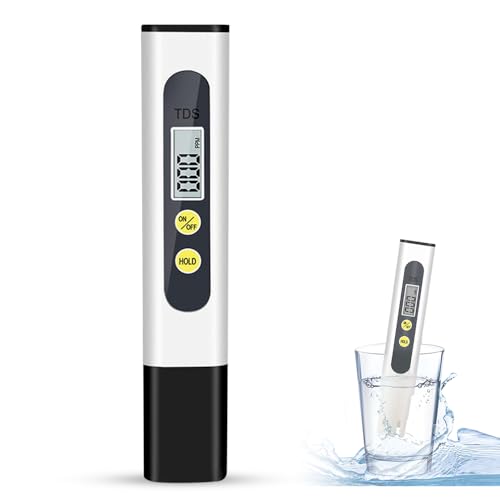
GLUN Pre-Calibrated Pen Type Digital LCD TDS Meter
Best BudgetThe cheapest credible TDS pen — pre-calibrated and hugely reviewed.
Our Rating
8.9₹179
Check Price Specifications
| Brand | GLUN |
|---|---|
| Type | Pen TDS |
| Modes | TDS + Temperature |
| Range | 0–990 ppm |
| Pre-Calibrated | Yes |
| Battery | 2x LR44 (included) |
| Origin | China |
| Amazon Rating | 4.1 (6,035 reviews) |
Pros
- Lowest credible price with a huge review base
- Pre-calibrated out of the box
- Accurate enough for routine checks
- One reviewer reports 3 years of reliable use
- Extremely simple to operate
- Batteries included
Cons
- LR44 battery drains fast / hard to source
- Some units fail after about a month
- Generic branding, minimal documentation
- Single-function; no backlight
Rating Breakdown
Our Verdict
At ~₹179 with 6,000+ ratings, the GLUN is the budget benchmark: pre-calibrated, dead simple, and good enough for routine drinking-water checks. Just keep spare LR44 cells handy — the battery is the main weak point.
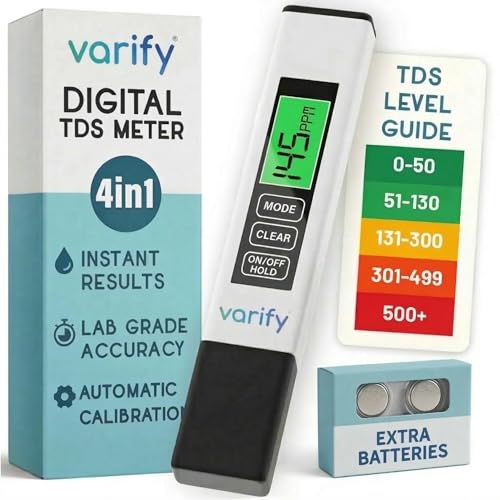
Varify Digital TDS Meter (TDS, EC & Temp 4-in-1)
Best 4-in-1A premium 4-in-1 tester for users who want the most modes.
Our Rating
8.9₹2,144
Check Price Specifications
| Brand | Varify |
|---|---|
| Model | TDS-4-V1 |
| Type | 4-in-1 |
| Modes | TDS, EC, Temperature |
| Battery | LR44 (included + spares) |
| Weight | 70 g |
| Listed | Jun 2025 |
| Amazon Rating | 4.5 (1,041 reviews) |
Pros
- Feature-rich 4-in-1 (TDS, EC, temp and more)
- High headline rating (4.5)
- Extra batteries included
- Fast results, easy to read
- Good for travel and frequent testing
Cons
- Expensive for a TDS meter (~₹2,144)
- Rating is heavily driven by non-India reviewers
- On/off button only powers on (auto-off only)
- Some report inconsistent readings on the same water
Rating Breakdown
Our Verdict
The most feature-loaded option with a high headline rating and spare batteries included. But much of that 4.5-star rating comes from overseas buyers, the on/off button is fiddly, and at ~₹2,144 it's hard to justify when Indian 3-in-1 meters deliver the same core readings for a seventh of the price.
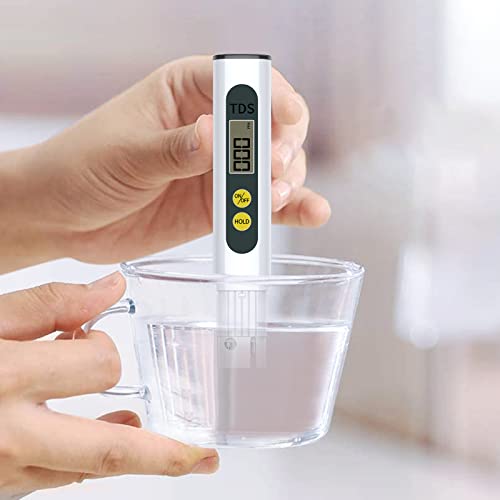
MEXYBE TDS Meter Digital Water Tester (0-9990ppm)
A no-fuss budget TDS pen that just turns on and dips.
Our Rating
8.8₹249
Check Price Specifications
| Brand | MEXYBE |
|---|---|
| Type | Pen TDS |
| Modes | TDS + Temperature |
| Range | 0–9990 ppm |
| Battery | LR44 (included) |
| Weight | 41 g |
| Amazon Rating | 4.4 (574 reviews) |
Pros
- Inexpensive and very simple to use
- Sturdy-feeling build
- Wide 0–9990 ppm range
- Accurate readings for most users
- Batteries included
- Handy for before/after filter comparisons
Cons
- Some units read differently each dip (~100 ppm)
- No backlight
- No instructions or value-interpretation guide
- Occasional early failures
Rating Breakdown
Our Verdict
A solid sub-₹250 pen praised for being sturdy and simple, with accurate-enough readings for most users. The trade-offs are no backlight, no manual, and some unit-to-unit accuracy variance — acceptable at this price for basic before/after RO checks.
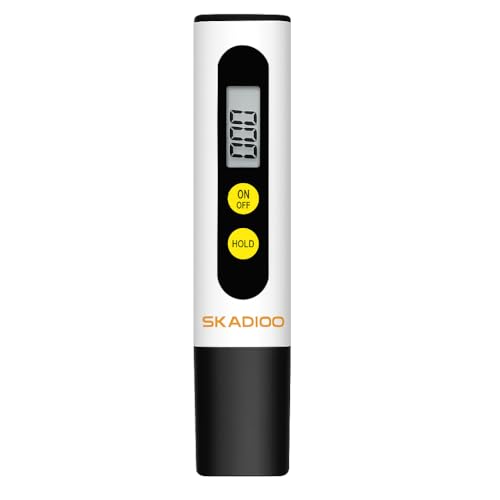
SKADIOO TDS Meter for Water Testing
CheapestThe lowest-priced meter here — grab-and-go for a quick TDS check.
Our Rating
8.8₹172
Check Price Specifications
| Brand | SKADIOO |
|---|---|
| Type | Pen TDS |
| Modes | TDS + Temperature |
| Range | 0–990 ppm |
| Battery | Sealed (non-replaceable) |
| Weight | 50 g |
| Amazon Rating | 4.2 (367 reviews) |
Pros
- Lowest price in the lineup
- Best-selling budget unit (#4 in category)
- Compact and easy to use
- Decent build for the price
- Fine for basic RO/tap checks
Cons
- Sealed battery — disposable once it dies
- Accuracy off on some units (e.g. 350 vs 190)
- No backlight
- QC variance; occasional DOA
Rating Breakdown
Our Verdict
At ~₹172 it's the cheapest way to start checking your water, with a tidy build and easy operation. But the sealed, non-replaceable battery makes it effectively disposable once the cell dies, and accuracy varies between units — the GLUN costs just ₹7 more and takes replaceable cells.

ACU-CHECK Digital TDS Meter Water Tester (0-9999ppm)
An India-made budget pen with a wide measuring range.
Our Rating
8.8₹218
Check Price Specifications
| Brand | ACU-CHECK |
|---|---|
| Type | Pen TDS |
| Modes | TDS + Temperature |
| Range | 0–9999 ppm |
| Battery | 2x LR44 (included) |
| Origin | India |
| Weight | 100 g |
| Amazon Rating | 4.1 (333 reviews) |
Pros
- India-made with local packer details
- Wide 0–9999 ppm range
- Batteries included
- Accurate readings for most users
- Compact and easy to use
- Low price
Cons
- QC variance — some units read wrong
- Occasional DOA units
- No backlight
- Single-function only
Rating Breakdown
Our Verdict
A dependable-enough India-made budget pen with the widest range here at 0–9999 ppm and batteries included. Readings are accurate for most users, but QC varies and a few units arrive faulty — par for the course at this price point.
Buying Guide
What TDS actually tells you (and what it doesn't)
A TDS meter measures Total Dissolved Solids — the combined mineral, salt and metal content of water — in parts per million (ppm), by reading electrical conductivity. It's the quickest way to check whether an RO purifier is working or how hard your tap/borewell water is. Important caveat: TDS does not detect bacteria, viruses, pesticides or many specific contaminants. Low TDS is not proof water is "safe"; it only reflects dissolved-solid load. Use a TDS meter to monitor your purifier, not as a complete water-safety test.
Indian drinking-water TDS ranges to know
As a rough guide for Indian homes: below 50 ppm is very low (RO can strip minerals — some prefer a mineraliser); 50–150 ppm is ideal for drinking; 150–300 ppm is good/acceptable; 300–500 ppm is the BIS acceptable limit for drinking water; 500–900 ppm is hard water that benefits from RO; above 900–1200 ppm needs treatment. Borewell water across much of India runs 500–2000+ ppm, which is why a meter pays for itself by confirming your RO is doing its job.
Single-function pen vs 3-in-1 (TDS/EC/Temp)
A basic TDS+temperature pen (Konvio Neer, GLUN, SKADIOO, MEXYBE, ACU-CHECK) is all most households need for drinking water and RO output. Step up to a 3-in-1 with ATC and EC — electrical conductivity — if you keep an aquarium or run hydroponics. The Konvio Neer 3-in-1 adds both for ₹599. The Aptechdeals 3-in-1 is cheaper at ₹279 but does not list ATC. A 4-in-1 (Varify) adds more modes at a steep premium.
Why ATC and a backlight matter
Conductivity changes with temperature, so a meter with Automatic Temperature Compensation (ATC) gives more consistent readings as water warms or cools — worth having if you test aquariums, geysers or seasonal tap water. A backlit display helps in a dim kitchen, but none of these pens have one. A "hold" function (Konvio 3-in-1) freezes the reading so you can lift the pen out and read it comfortably.
The battery trap — check before you buy
The single most common complaint across every budget TDS meter is the battery. Most use tiny LR44/AG13 button cells that drain in months and can be hard to source locally. Two practical rules: (1) buy spare LR44 cells up front, and (2) avoid sealed/non-replaceable designs (e.g. SKADIOO) if you want the meter to last beyond its first battery — once the cell dies, the whole unit is disposable. Replaceable-battery pens (Konvio, HM Digital, ACU-CHECK) are the smarter long-term buy.
Reading accuracy: calibrate and cross-check
Most pens claim ±2% accuracy and are pre-calibrated, but cheap units can drift or read differently on each dip. Three habits keep you honest: stir and let the reading settle for ~10 seconds before recording; rinse and dry the probe between samples; and if your meter has a calibration screw/button, verify it against a known reference (e.g. a 342 ppm or 1000 ppm calibration solution) every few months. If a unit varies by more than ~30–50 ppm on the same sample, return it during the window.
Buying for an aquarium or hydroponics
Aquarists and hydroponic growers should prioritise EC mode and ATC, not just TDS — nutrient strength and salinity are read more meaningfully in EC (µS/cm or mS/cm). The Konvio Neer 3-in-1 covers this affordably; VIVOSUN-style imports do the same job but cost several times more in India for no real benefit. A reading-hold function and a probe rated to higher temperatures (the Konvio 3-in-1 handles up to 80°C) are useful extras for this use.
Frequently Asked Questions
What is a good TDS level for drinking water in India?
Does a low TDS reading mean my water is safe to drink?
How accurate are these budget TDS meters?
What is the difference between TDS and EC mode?
Why does my TDS meter give different readings each time?
Which battery do TDS meters use and is it replaceable?
Do I need a 3-in-1 (TDS/EC/Temp) or is a basic pen enough?
Are expensive imported TDS meters worth it in India?
First published